

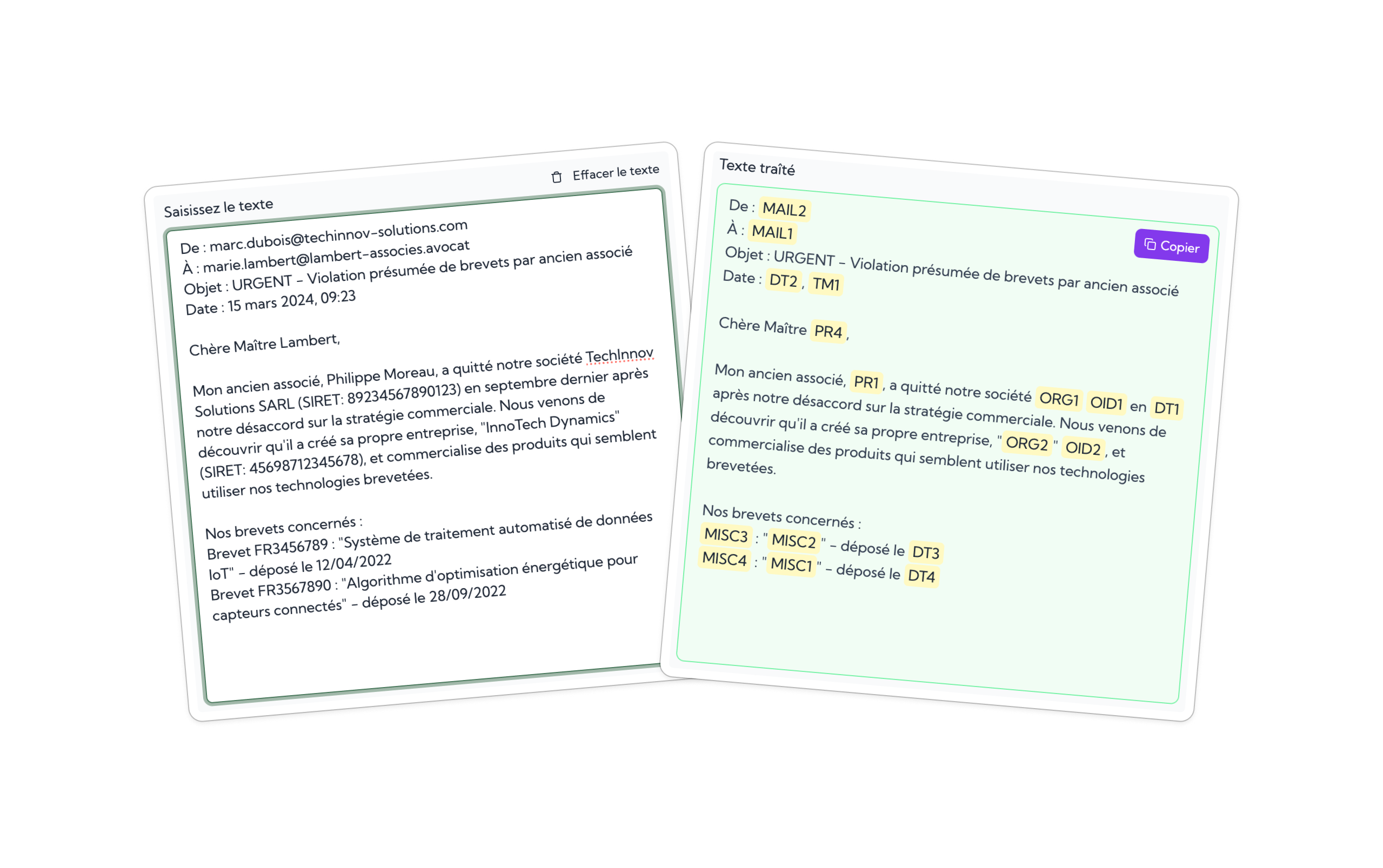
In the age of data and artificial intelligence, it is likely that you, like many companies and freelancers, handle increasing volumes of identifying and confidential information. Customers, employees, partners... every piece of data can become a strategic asset or a legal risk.
Anonymization is no longer simply a regulatory requirement. It is a fundamental choice in data architecture and governance.
Anonymization vs. Pseudonymization
The General Data Protection Regulation (GDPR) clearly distinguishes between two fundamental concepts:
➡️ Pseudonymization: data is transformed but remains re-identifiable via a correspondence key.
➡️ Anonymization: it becomes irreversibly impossible to identify a person.
This distinction changes everything in terms of governance and technical architecture.
💡 Good to know: When anonymization is properly implemented, the GDPR no longer applies to anonymized data.
Why Anonymize?
1. To reduce legal and strategic risk
Exposing identifying information does not only pose a regulatory risk. It can also lead to a loss of customer trust, damage to brand image, and internal tension around sharing information with third-party services. In an interconnected world such as ours, companies have a duty of transparency regarding the collection, processing, and storage of personal data.
By anonymizing data, you reduce the attack surface and transform static data into usable data. This is a logical approach to structural risk reduction, not simply compliance.
2. Moving away from the “keep or delete” mindset
Many companies and organizations operate according to a binary alternative: keep personal information (often exempting themselves from GDPR constraints and exploiting its potential) or delete it permanently.
Anonymization therefore opens up a third way with numerous possibilities for reusing data that was initially prohibited due to its personal nature (all identification is made impossible and the intrinsic value of these data “pools” remains unchanged).
It also allows data to be retained beyond its retention period.
In this case, data protection legislation no longer applies, as the dissemination or reuse of anonymized data has no impact on the privacy of the individuals concerned.
In particular, this makes it possible to maintain usable histories, produce longitudinal analyses, feed strategic dashboards, and capitalize on years of data without legal risk.
Data ceases to be a regulatory liability and becomes an informational asset once again. This enables companies to improve their opportunities for innovation and research.
3. Create a secure foundation for artificial intelligence
In a context where AI is becoming central, anonymization is becoming a technical prerequisite. It unlocks new use cases and allows organizations to benefit from the full potential of the most powerful tools on the market.
AI systems process enormous amounts of data every day, including confidential data. Given the opacity of the systems and methods used, the importance of anonymization cannot be overstated. This balance is now the cornerstone of more responsible data governance.
Anonymization is therefore a relevant solution for preventing discrimination and algorithmic bias.
4. Foster a culture of data control
Anonymization also acts as an organizational revelator. It forces us to ask the right questions: Why are we collecting this information? Is it really necessary? Who needs access to it? For how long? For what specific purpose? This clarification process improves the overall quality of the information system. Less superfluous data. Less unnecessary access. Less risk in the event of a data leak. Greater clarity. Greater peace of mind.
Anonymize or Pseudonymize ?
Anonymization is not simply a matter of masking a surname or administrative identifier, a date or amount, a bank identification number, or a passport number. It also involves removing the metadata contained within the document. It means removing what is visible, but also what is not.
Pseudonymization goes even further to preserve the analytical value of a text or document. It involves detecting critical data and distinguishing it from secondary, non-identifying data that constitutes the main value of the document. How does it work in practice? Pseudonymization involves replacing identifying data with consistent pseudonyms, thereby preserving the substance of a document. Pseudonymization offers perfect granularity for exploiting data and capitalizing on knowledge.
Pseudonymization is one of the measures recommended by the GDPR to limit the risks associated with the processing of personal data.