

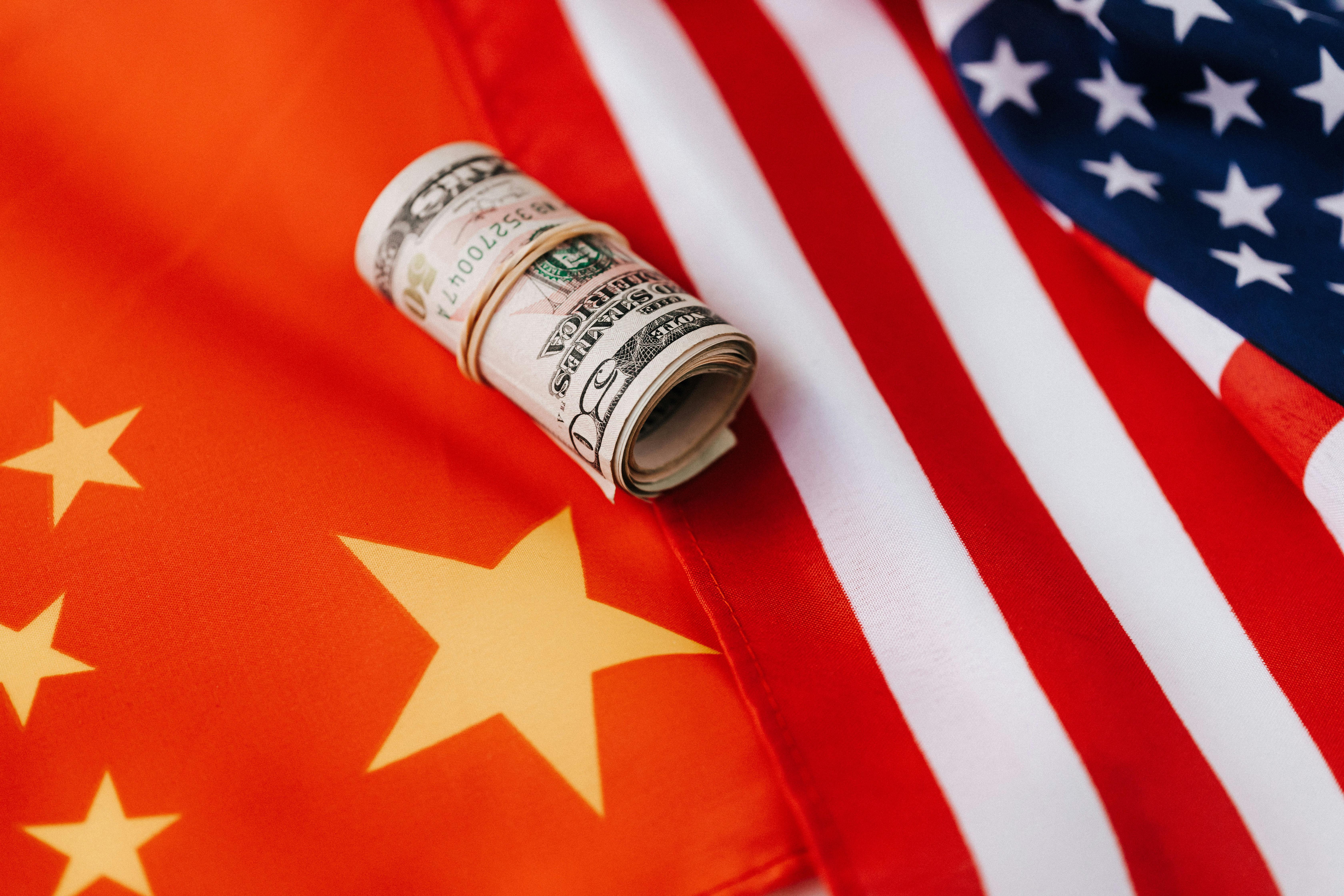
The AI Race: Between Myth and Reality
The prevailing idea of an “AI race” between the United States and China is based on several analytical and narrative misconceptions. It assumes a common goal, a comparable technological trajectory, and a shared finish line.
The first misconception is to believe that China's trajectory is centralized and dictated directly by Xi Jinping.
In reality, AI development in China is the product of a fragmented ecosystem: companies, universities, laboratories, local governments, and entrepreneurs collectively shape its uses, often without specific directives from the top.
What if the approach were different?
The second, more profound misinterpretation concerns the very goal assigned to AI.
In the United States, AI is largely viewed through the prism of AGI (Artificial General Intelligence): a quasi-human entity, endowed with both salvific and apocalyptic potential, heir to science fiction, the Turing test, and a technological culture with quasi-messianic overtones. This vision is embedded in the DNA of major American laboratories such as OpenAI and Anthropic.
In China, on the other hand, public policy and industrial practices suggest a significantly different approach.
AI as an economic lever
AI is seen less as an intelligence in its own right than as a pragmatic lever for economic efficiency, industrialization, and governance. AI is primarily instrumental.
Chinese public policies, starting with the “AI Plus” plan, make no mention of AGI. The stated objective is elsewhere: to massively integrate AI into industry, logistics, manufacturing, governance, and services in order to boost productivity, support growth, and compensate for structural weaknesses, particularly demographic decline.
China under constraints
This last point is central. As the working population ages and shrinks, AI appears to be a tool for economic and organizational compensation. It is not thought of as an anthropomorphic “machine god,” but as a productivity lever intended to fill a labor shortage and support the economy.
This does not mean, however, that there are no AGI-oriented visions in China. Players such as DeepSeek are part of this perspective, but they operate under severe constraints, particularly those related to import restrictions imposed by the United States since 2022, resulting in limited access to advanced chips, including the most powerful GPUs designed by Nvidia.
Cultural differences explain technological differences
These constraints have fostered a distinct technological trajectory, focused more on model efficiency than on the headlong rush toward hyper-scaling and the construction of mega data centers, which today characterizes the strategy of major American laboratories.
In the field, this cultural difference is palpable.
In China, AI is already deeply embedded: biometric payments, facial recognition, robots, connected objects, humanoids, educational and industrial uses are part of everyday life.
How is AI perceived from one continent to another?
At the World Artificial Intelligence Conference in Shanghai in 2025, AI appears, despite technologies that are sometimes still in their infancy, as a familiar, almost playful object, arousing curiosity and optimism.
Visitors interact with machines in a physical and concrete way, far from any abstract or distant representation.
In the United States, on the other hand, AI is more often perceived as a diffuse and threatening force, associated with job losses, misinformation, or a dystopian imagination inherited from science fiction.
Improvement in daily life or disillusionment?
This contrast is not only due to the technologies themselves, but also to the recent history of each country.
Since 1980, technological development in China has coincided with a dramatic improvement in living conditions, with some people seeing their incomes increase tenfold or even twentyfold. Technology is widely associated with social advancement and improved daily life.
In the United States, on the other hand, recent decades have seen a build-up of economic disillusionment, political polarization, and growing mistrust of digital technologies, which are perceived as sources of social disruption as much as progress.
The downside of technological advances
But there is a dark side to Chinese optimism.
The widespread use of AI has been accompanied by a massive increase in citizen surveillance, made possible by facial recognition and large-scale tracking technologies.
At the same time, despite proactive political rhetoric, youth unemployment, at historically high levels, is a source of deep concern for society. This situation reveals the limits of the narrative that AI is automatically synonymous with growth and social stability.
Is there an AI bubble in China?
This social tension is part of an economic context that is more fragile than it appears: a scarcity of venture capital, forced consolidation of the sector, price wars, and a phenomenon of “involution,” where excessive competition ultimately destroys profitability rather than creating it.
In this landscape, robotics appears to be one of the few segments that is overheated, to the point of exhibiting the characteristics of a speculative bubble.
Between development and risk prevention
In the background, the United States and China face a shared challenge: continuing to develop AI in order to preserve their strategic competitiveness, while limiting the associated systemic risks, whether social, economic, security-related, or existential.
Despite a climate of marked mistrust, forms of cooperation remain possible, particularly around security standards, system interpretability, governance mechanisms, and maintaining human control over critical military uses. In this regard, the possibility of an international framework inspired by non-proliferation regimes cannot be ruled out.
Two different paths toward cooperation?
Ultimately, reducing the American and Chinese trajectories to a simple “race for AI” oversimplifies the issues at stake.
The United States is pursuing a vision centered on the emergence of general intelligence with major civilizational implications, while China favors an instrumental approach geared toward productivity and the transformation of its economy.
These are not so much two competitors on the same track as two technological models with distinct priorities, visions, and risks.
For further information: America and China Are Racing to Different AI Futures